Wednesday, June 3, 2015

Local Places to Swim

If you're looking to cool off or have some fun at the beach without having to drive very far, take advantage of the lakes and ponds in the Monadnock region.

The closest to the Bridges Inn, and our personal favorite, is Richardson Park, on Swanzey Lake.
Open from Memorial Day through Labor Day, daily, 10 a.m. to 8 p.m. It's a shady beach with a nice view and water quality is generally considered good. There's no charge to get in and plenty of parking. Shown below, Richardson Park is for Swanzey residents only, including guests of the Bridges Inn.


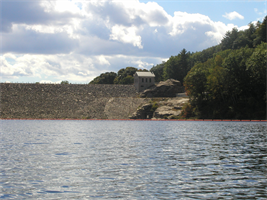
Otter Brook Lake Recreation Area in Keene and Roxbury and Surry Mountain Lake Recreation Area in Surry (shown below) are operated by the Army Corps of Engineers. Both are picturesque, family-friendly places for swimming, picnicking, and canoeing. There's a sandy beach, roped-off swimming area and plenty of grassy areas to set up games throughout each park. There are also picnic tables and rest rooms.


On Spofford Lake in Chesterfield is Wares Grove is on Route 9A. The water is shallow for a long way out and is great for young children. The large sandy beach has a grassy area in the shade with picnic tables, a concession stand and a volleyball court, basketball, tetherball, and a swing set. There are bathrooms and grills. There are resident and non-resident fees.

For more information about swimming holes in the Monadnock region, click here.

In addition to directing Bridges Inn guests to places to swim, we can help you plan other activities to fit your particular interests.

Sunday, March 29, 2015

"New" Chairs

Owning a house built in 1792 means that we continually make improvements, both inside and outside. We have updated the plumbing, electrical, and heating systems; we have replaced windows; done significant work on the slate roof; and landscaping. We have replaced ceilings, floors, walls, and wallpaper in various parts of the house, carefully striving to retain the antique character of the house.

Redecorating is one of the improvements that's most fun for me. By redecorating, I am referring to the aesthetic side of things, such as wallpaper, new curtains, furniture, antiques, and the like. Recently, we succeeded in blending the new with the old by purchasing a set of four chairs-- two with arms, two without -- from Attic-Antiks, a local antique store. We had the chairs reupholstered by Debbie Does Divans with fabric that matches existing dining room drapes and chairs and also fits in with the color scheme in the living room.

The two chairs with arms (shown below) fit in our living room beautifully and are quite comfortable, too. When we have a large group at the dining room table, we use them to increase the seating.

"New" chairs in the living room in front of the 70-year-old Christmas cactus
We only had six dining room chairs and when we had more than six people at the dining room table, we used a variety of unmatching chairs. The chairs without arms are now part of our dining room (shown below).


Below are two of the six dining room chairs that Debbie Does Divans reupholstered a few years ago. The original and "new" chairs match so well. Debbie has reupholstered many beautiful pieces of furniture in the inn and we value her precision and skill.


Shown below is the dining room table, set for breakfast. The runner on the table is made from the same fabric as the chairs. The dishes were a set we bought at  Attic-Antiks a couple of years ago.


Dishes shown close up
Our guests appreciate the details and extra little touches that we put into the inn. And we appreciate doing business with local companies that we can rely on. 

(Note that the fabric on the chairs and runners is from the same bolt of fabric. The lighting and time of day make the colors look very different in the photos.)


Sunday, November 30, 2014

Coffee or tea, anyone?

One of the things that our guests continually appreciate here at the Bridges Inn at Whitcomb House is the quality and variety of coffee and tea we have available.

Available 24/7 in our dining room (self-serve):
      An assortment of Keurig K-cups and tea galore.


     K-cups for our Keurig maker:
       Regular coffee, varying strengths
       Decaf and Half-Caf coffee
       Flavored coffee (e.g., vanilla and hazelnut)
       Chai Latte
       Hot Chocolate


     A variety of tea selections and a hot-water heater (boils water fast):
         English breakfast tea
         Black and green tea
         Flavored black tea (e.g., peach and orange spice)
         Decaffeinated black and green tea and flavors, too
         Caffeine-free tea (e.g., lemon, chamomile, mint)
         We always have plenty of Stash Tea


Speaking of Stash Tea, we participate in the Stash Tea Bed & Breakfast program. We accept Stash Tea stay-one-night-second-night free certificates. For details, check out Stash Tea online or on specially marked tea packages.

Served with breakfast, and well before:
   Brewed coffee from fresh roasted coffee beans from Prime Roast in Keene.
   We normally brew Demon roast or Ethiopian roast, but we get other roasts and blends as well.
   We always have decaf from Prime Roast available, too.
   Many of our B&B guests stop off at Prime Roast to get coffee, ground or beans, before they head for home. Check out their exciting new project: Prime Roast Company - Brick House Roastery.


We start by grinding beans and then perk each pot fresh each morning. And we perk as many pots as we need. We have Bridges Inn mugs as well as cups and saucers to match the china pattern we're using that day. If your schedule doesn't allow you to stay for breakfast, you can ask for your coffee to go.


We have sweeteners to fit most every palate (or diet): cane sugar (granulated, organic, and cubes); Splenda, Equal, and Sweet 'N Low (saccharin); Truvia (stevia); plus equivalents. We also have local honey, which some tea-drinkers request.


We offer light cream, whole milk, and fat-free milk.

In-room coffee or tea:

So that guests can make in-room coffee any time of day, every guest room has a coffee maker, cups, and supplies on cozy wicker tables with matching chairs. Shown below are coffee stations in the Slate Bridge Room (top) and the Coombs Bridge Room (bottom). 


So if you're a coffee or tea lover, we think we've got you covered here at the inn. And if you drink neither, maybe you'd like a cup of hot chocolate.

Wednesday, October 8, 2014

Autumn in the Monadnock Region

Autumn is a beautiful time of year in the Monadnock Region and there's plenty to keep you busy. The region abounds with colors.

Our favorite Thompson Covered Bridge is a stone's throw from the inn.

Along Route 9, Stoddard - Photo by Laurie Ray Paquin

View of Mount Monadnock from the top of Mount Caesar, Swanzey - Photo by Bryan LaRoche

Another great activity is apple picking. Two local orchards that we often visit are:
Maple Lane Farm, 220 Gunn Road, Keene
Alyson's Orchard, off Wentworth Road, Walpole

Also worth a visit is Crescendo Acres farm, north of Keene off of Route 12A. In addition to autumn crops, we love the alpacas. The mums adorning the entrance of the Bridges Inn are from Crescendo Acres. The alpacas, of course, are there year-round.

If you're in the area on October 11th or 12th, the Fall Foliage Studio Art Tour gives you the opportunity to take a self-guided tour to the studios of participating local artists. This is always a 'must' for us.

You might also want to check out the State of New Hampshire's Fall Foliage Tracker app, which allows you to find where and when the peak colors are. The photo below is from the website of the New Hampshire Division of Travel and Tourism Development.

Many people come to the region for the Keene Pumpkin Festival, which is on October 18th this year.
 

Whatever brings you to the area, we hope you will stay at the Bridges Inn at Whitcomb House. We are full weekends in October, but we do have availability week-day nights; or you can reserve for autumn 2015. Have a wonderful, colorful autumn!


Thursday, March 20, 2014

Maple Sugaring in the Monadnock Region

In much of New Hampshire, one of the early signs of spring is when the maple trees are tapped for sap. The conditions have to be just right with cold nights and warm days which allow the thawed sap to run.

The Faulkners from Covered Bridge Maple Syrup House in West Swanzey, right next to the Slate Bridge, tap the large, old maple trees at the Bridges Inn. And after the sap is boiled down, they deliver maple syrup to us. We love serving it with breakfast.


This year, maple sugaring got off to a late start. New Hampshire Maple Sugar weekend is March 22nd and 23rd. Some of the local farms where you can watch syrup being boiled are:

Crescendo Acres Farm, in Surry, just north of Keene. We often get maple syrup from Crescendo Acres and love visiting them not just for maple syrup but also to see their mini horses and alpacas.


The 15th annual horse-drawn sap-gathering contest at Stonewall Farm in Keene, 9:00 AM on March 22nd. In addition to the sap-gathering contest, there's plenty to do at Stonewall Farm.


In addition to serving fresh maple syrup on pancakes and other breakfast food, we sell maple syrup at the inn. We hope you'll come see us!


Thursday, October 24, 2013

The History of the Whitcomb House


The Bridges Inn is located in a house built by the Whitcomb family, on a site originally settled by the Strattons.  It is of a distinct style, only found in New England, where there was a high-concentration of Yankee farmers.  We might call it an extended or connected house, while historian Thomas Hubka refers to it as, "Big house, little house, back house, barn".


In the above picture, there are four different pitches on the roof, representing what is likely four phases of construction.  The barn is visible with the two garage doors and a flag, followed by the back house, which ends at the bay window (popular during the late nineteenth century).  The little house, employing Hubka's terminology, would include the bay window and the three windows above it.  Finally, in the front of the house facing Main Street, we find the original Stratton residence. Also visible in old photos of the house is a wrap-around porch that was removed about a half century ago.

Proceeding with a mixture of observation, guess work, and Hubka's research, we will take a look at how this unique house came into being.  The Whitcombs purchased the house in 1841, which at that time, may have been a typical cape, as in Cape Cod-style home, two rooms wide and one room deep, called by Hubka a hall-and-parlor house.  It is typical for that style of house to be built as a single story.  When the family could afford it, they would jack up the cape and build an entire first floor beneath the original home, sometimes with a lavish wrap-around porch, seen in the black and white photo below.

Looking at the photographs, we can clearly see that the front part of the house has a granite foundation, while the second part of the house, near the bay window, changes over to a brick foundation.  I conclude that the the Strattons built the granite part, while the Whitcombs constructed the parts of the house built on a brick foundation.  After purchasing the property, the Whitcombs, being Whitcombs, built an entire house attached to the original home.  This 1841 demarcation runs approximately up from the window in the center of the photograph below, where a door used to be.


Looking at this old photograph (below), a prominent door existed next to the bay window.  This corresponds to the style that Hubka calls a center-chimney house.  If there was a center chimney, it would have been right in front of the side door next to the bay window. 


Yankee farmers were nostalgic for their fireplaces and reluctant to give them up.  The mantle and a roaring fire are all very romantic.  However, they are also quite drafty and waste heat, burning wood inefficiently.  Hubka reports that beginning in the 1840's, New England farmers made the move towards wood stoves.  Many farmers built what is called a summer kitchen, a room for the stove, which was used year-round despite the name.


In the picture above, the old wood stove can be seen, as well as where its chimney used to connect to the wall.  In the background are the stairs that would have been immediately in front of the side door (now gone).  These stairs are steeper and more narrow than the other set of stairs, in the front of the house, which makes me wonder if these stairs were built after a chimney was removed.  The black and white photo above shows two chimneys, one for the wood-powered cooking stove and one for the boiler in the basement, to produce steam heat.  Prior to that, if there was a central chimney, it would have been where the staircase is, in the photo above.

The summer kitchen may have been built sometime after the Whitcombs moved in.  It is included in what Hubka calls the back house.  He says that after the 1830's, New England farmers could not compete with agricultural products shipped down the Erie Canal from Ohio River valley farmers.  Struggling to survive, they became involved in home industry, especially during the winter months.  In the back house, which we call the tea room at the Bridges Inn, yankee farmers may have processed food, carved trinkets, and produced items for sale, such as wooden chairs and tool handles.


Finally there is the barn, beginning with the sign (at the left of the flag) until the end; radiators installed in the barn indicate that the barn was once heated.  The garage doors may have been built for carriages. The short, wide windows would have been just right to slide down bale of hay, to eagerly awaiting horses.  New England farms struggled through the nineteenth century, until the advent of refrigerated railroad cars created the dairy market and brought financial stability to the farmers.  At that point, however, it may have been too late.  Many New Englanders left home for the promises of the West, and many New England towns celebrated Old Home Days to invite their children back from the cities.

The Whitcomb House may be unique in that it was never a working farm.  The railroad came through West Swanzey, so products were produced for the market.  The Whitcombs owned some land and had access to trees, allowing them access to plenty of lumber.  They produced buckets and other containers, before the age of corrugated cardboard, shipping them on the railroad.  The ruins of their factory can still be seen down Prospect Street, beyond the Inn, with a prominent smokestack, protruding from what must have been a foundry (to make nails for the buckets).

The house stayed in the Whitcomb family until after Edna Whitcomb's death in 1961. By then, most of the construction was completed. For about thirty years, private families lived here.  Then in the nineties, the Munsons converted the home into a bed and breakfast. They sold the property in 2001, and in 2006, the current innkeepers bought the historic property.

Thursday, October 10, 2013

Colorful Cheshire County

This region of southwestern New Hampshire is also known as the Monadnock Region and Cheshire County. Whatever you call it, you have to appreciate its colors at this time of year. Although heavy rain and wind took down several leaves earlier this week, this area is still filled with an array of beautiful autumn colors.

Below are some photos of this region, some compiled from facebook postings, with credit given to the photographers.
We took this photo of this beautiful maple on Belmont Street in Keene

 
Photo of the Bridges Inn (taken during a previous autumn)

Another photo of the Bridges Inn (taken during a previous autumn)

   
                 Ashuelot Covered Bridge - Winchester         Slate Covered Bridge - Swanzey
                John Burk Nature Outdoor Photography                    Donna Doherty

   
                Marlboro Jaffrey Line - Mt. Monadnock               Wilson Pond - Swanzey 
                             Tauna Gravel Calise                                  Diane Purrington

The State of New Hampshire has a website listing events and scenic places throughout the state http://www.visitnh.gov/4-seasons/fall-harvest/default.aspx
You'll also find a foliage tracker app at
We're fairly booked at the Bridges Inn at Whitcomb House for October. Most of our availability at this point is during the week. If you can't make it to New Hampshire during October, we think this region is beautiful at most any time of the year.
 

Round images by Suerae Stein of Red Barn Artworks - they are for sale as ceramic ornaments at the Bridges Inn at Whitcomb House.